Complexity is not an abstract technical problem. It is a business drag on speed, margin, and trust.
In an AI coding workflow, more code can be produced faster than ever. That makes it even more important to manage what the code adds to the system: decision overhead, dependency risk, rework, and operational load. If teams do not budget for complexity reduction, AI can accelerate the rate at which future cost accumulates.
Cost per change rises quietly
Every workaround, unclear boundary, and duplicate path makes the next feature more expensive to ship and test.
Busy teams still miss dates
When interruptions and cleanup work stay invisible, delivery plans look solid on paper and slip in practice.
New value takes longer to monetize
Features wait behind integration friction, unstable foundations, and the hidden tax of fixing what should have stayed simple.
Customers feel late discovery
Quality issues do not stay technical. They become escalations, support cost, and lower confidence in your roadmap.
Cheap early clarity. Expensive late discovery.
The rule is simple: spend one unit of effort to surface complexity early, ten units to fix it while building, or a hundred units once it escapes into production. AI lowers the cost of generating code. It does not lower the cost of being wrong late.
Clarify during planning
Define ownership, boundaries, and the cleanup work that keeps the next sprint faster. This is where complexity is cheapest to manage.
Fix it during implementation
Now the team pays in redesign, extra QA, broken assumptions, and the productivity loss of switching back into old decisions.
Pay for it after release
Production incidents, roadmap churn, customer-facing defects, and emergency work multiply the cost after the code is already live.
AI can produce code faster. Humans still have to decide what the business can safely depend on.
The leverage of experienced teams has shifted. Less value comes from typing boilerplate. More value comes from deciding what not to build, what to simplify, where risk sits, and which work protects future speed. That is exactly the focus Work Type Focus makes visible in Jira.
Choose boundaries
Humans decide how systems are divided, where ownership sits, and how to avoid dependency sprawl that slows every future change.
Reduce complexity on purpose
Generated code still needs refactoring, cleanup, and simplification. Otherwise speed today becomes drag next quarter.
Hold risk and quality lines
Humans own the tradeoffs around reliability, compliance, customer experience, and the thresholds that should never be crossed.
Protect real innovation time
When interruptions and complexity are visible, teams can safely create space for experiments instead of letting noise consume every sprint.
Make complexity visible before it becomes rework.
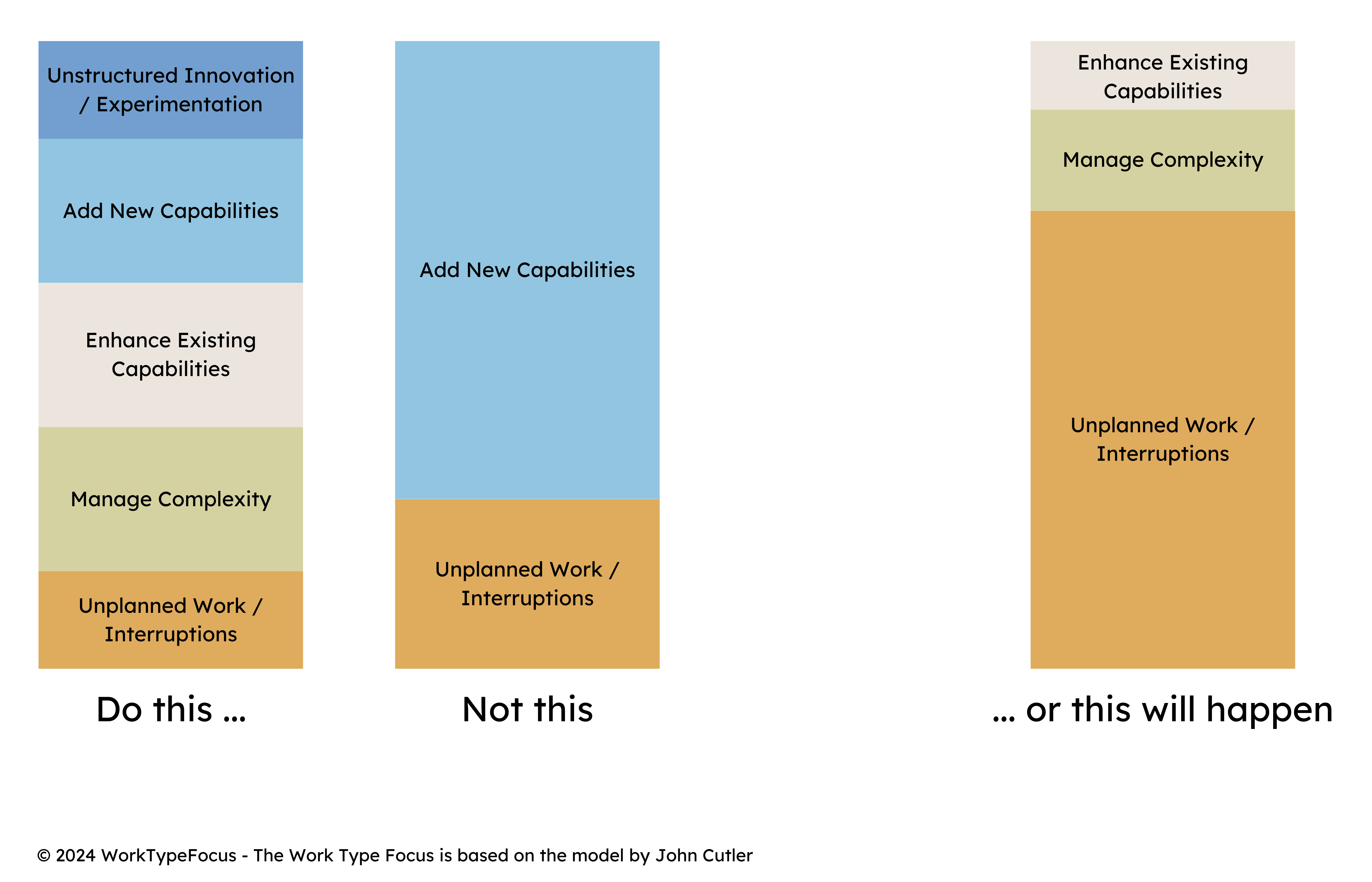
Work Type Focus gives product and engineering a shared language for the work that usually hides underneath "delivery speed." Instead of debating why the team feels slower, you can see the mix: interruptions, complexity management, enhancements, new capabilities, and innovation.
Classify the real work
Every issue in Jira gets a work type, so complexity and interruptions stop being invisible overhead.
See the tradeoffs clearly
Leadership can tell whether delivery is being slowed by noise, cleanup debt, or deliberate product investment.
Protect the budget for focus
Reserve time for complexity reduction before the work arrives later as bugs, escalations, and broken plans.
Give complexity a budget before it becomes a bill.
Use Work Type Focus to turn AI-era delivery into visible tradeoffs, healthier sprint mix, and better subscription-grade predictability inside Jira. If your team is writing more code than ever, this is how you keep that speed from converting into future cost.